Showing posts with label gender. Show all posts

Saturday, 24 May 2014

Poet's Pub


This post is a speculative application to the current Falskkiosk Information Service of the Borås International Sculpture Biennial 2014 as an unpaid and absent intern.


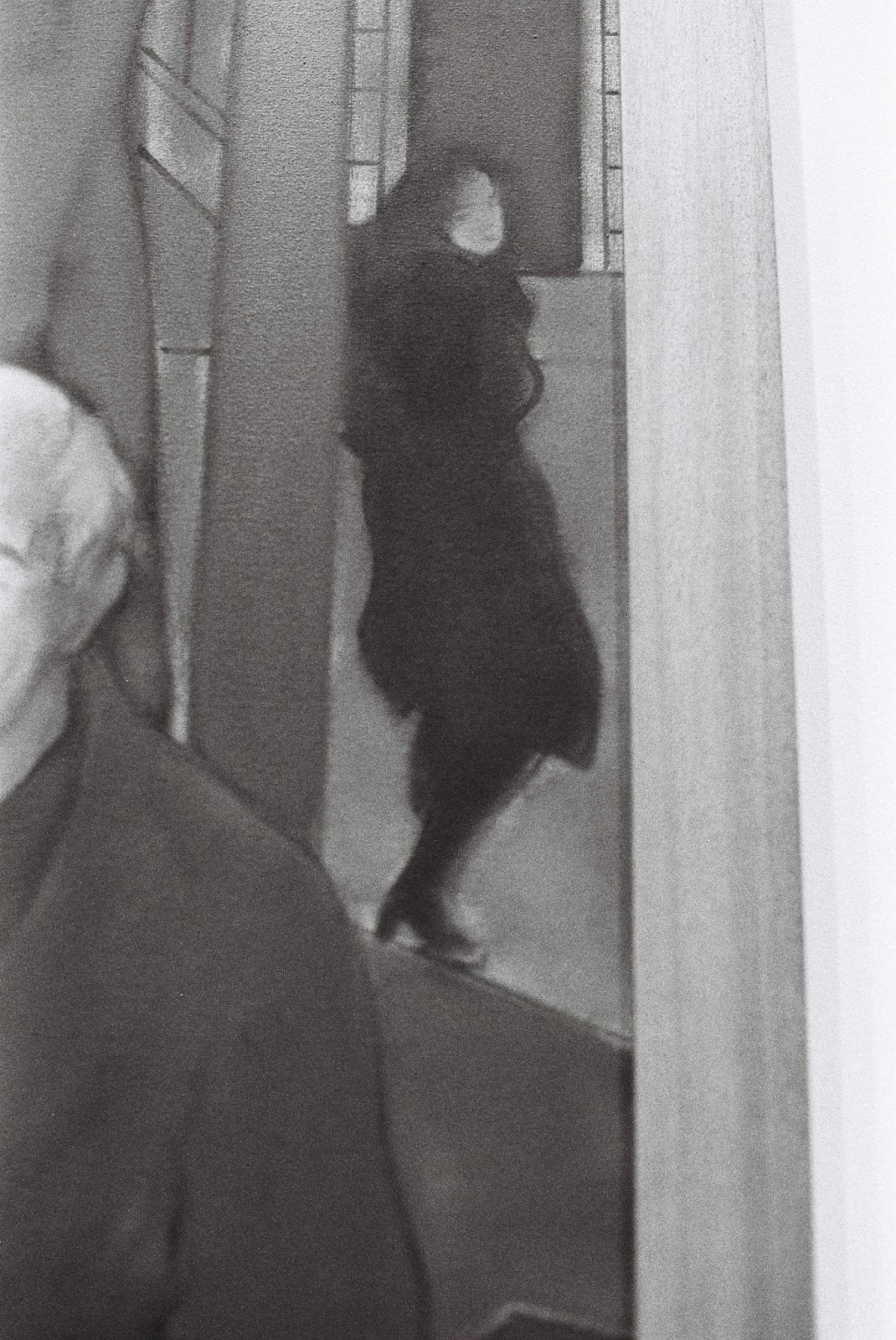
This is a portrait of the famous Scottish Modernist Poet, Edwina Nacht, which hangs in the Scottish National Portrait Gallery in Edinburgh. You may be forgiven for asking, well, where is she? I can't even see her?

Alexandra Tuffat, the artist, says she deliberately painted Nacht as a seemingly insignificant background figure:

‘You can hardly see her at first. I instinctively felt she belonged in the doorway on the right hand side of the picture. She is rather small in the frame, its true. I did this because in her poetry she always put marginal figures, such as male prostitutes, in the foreground of her work, just as I have done in this painting.’

The nine figures in the foreground of the painting are based on Nacht's prose portraits of well-known male prostitutes who frequented her favourite pub, which was in fact an amalgamation of all the pubs in Edinburgh.

As Tuffat recounts: ‘I remember evenings would end with a dog-fight breaking out amongst the men. I felt though I wanted to capture the dignity of the prostitutes in my painting, just like Nacht did in her poems. We both become personally affected by their stories; they were obviously past it.’

Alexandra Tuffat also wanted to capture Nacht’s working process:
‘To help her get into the zone of writing poetry, Nacht liked to slide down slopes in black patent leather heels. Hers is an intense watchful gaze, here she is clearly fascinated by the colourful clothes and colourful language of the male prostitutes. I remember it as if it was yesterday’
 
Sliding down slopes helped creative process    Detail 


This painting has serious implications for Edinburgh society of the '80s. Men, it seems, were often forced to socialise together in groups, drinking together, and had to discuss things intensely for hours. Women, however, could be on their own, were not forced to form any groups and didn’t have to discuss anything at all. This was one of the themes elaborated on time and again in Nacht’s work.

Alexandra Tuffat: ‘She was an amazing creative force, always encouraging men to isolate themselves, although it was not at all fashionable or acceptable at the time. Such outspoken views meant total inclusion for Nacht into artistic society; she would be included in absolutely everything, which just makes me feel so sad now to think of it, how much she suffered for her art, for her beliefs.’

A key to the 'Gents of the night', numbered from 1 to 9


More information about the painting is available here on the Scottish National Portrait Gallery website.


Wednesday, 11 July 2012

The Hollow Crown


Some people may be worried that Wimbledon is becoming to modern, what with the introduction of the hawk eye, and more recently the high tech roof. After watching it this year I find myself wishing it would catch up with the rest of the world, especially the BBC’s overbearing patriotism and sexist commentary.

Over the years I haven’t been able to watch as much Wimbledon as I would have liked. Living abroad in Germany has made it much more difficult to get into the spirit of it and even to get a chance to watch a match. No one really gets it here. I remember one year begging the owner of a sports café to show it on his screen. We were the only ones watching it, and I remember laughing as the German commentators were left speechless yet again as the TV cameras panned onto another celebrity in the crowd.  Silence, that seemed to last an eternity. Oh how I pined for British TV and the BBC commentary.

This year, my wish came true. I was able to watch some of Wimbledon on the BBC. But sometimes you have to be careful of what you wish for.

As I started watching the men’s double match, I was pleased to discover that I had hit upon an “historic” game, where the players were not only wildcards, i.e. not ranked high enough to gain automatic entry, but one of them was a Brit. I must admit, this fact didn’t make me jump for joy as much as the commentators appeared to think it might, though I spent the rest of the match playing guess the Brit, that is how clueless my tennis knowledge had become.  In the post match interview after they had triumphed, the poor Dane who had joined forces with Marray was practically asked to give up his nationality such was the patriotic fervour. However, as we had been repeatedly assured by the commentary, Marray had been “the rock” of the match anyway, so the little trifle of his partner being Danish didn’t matter.  Nielson had obviously just spent most of the match ball-whispering and trying to distract Marray with his high-fives (all of which were, admittedly, annoying). No one mentioned that it was the first time ever that a Dane had won a Wimbledon Championship final.

Next up were the Women’s doubles finals- unfortunately a bit late as the men’s doubles match had gone over five sets. As I sat glued to the TV, excited at the prospect of seeing the Williams sisters win yet another title, the crowd at Wimbledon thinned out to leave embarrassingly few spectators for such an important match. Then came the body blow as we were told that ‘The Hollow Crown: Henry IV” was not being aired on BBC2 because of the tennis. In fact, viewers were kept on the edge of their seats all evening, not because of the Williams sisters dazzling tennis, but because of the constant updates as to the likelihood of the “The Hollow Crown” being aired.

Heads must have rolled before this U turn:

“Just a minute”, said one commentator, “We are just getting an important message through about “The Hollow Crown. It very well might be shown”

Geee, whizzzz, let me know when you’ve made your mind up is all I can say!

By some strange coincidence, John Hurt happened to be in the audience, which prompted the commentator to ask at one stage:

“I bet even John Hurt would have a tricky time deciding whether to watch “The Hollow Crown”, which he just happens to be in, or this match”.

Hmm, maybe he is behind all of this and is just in the audience to remind us of the Hollow bl**dy Crown.

And it didn’t stop there. Later that evening:

“The Women’s Doubles will move over to BBC1 and the Hollow Crown will be shown on BBC2 as scheduled.”

Thank God that’s decided, now we can concentrate on the match and listen to some great tennis commentary from Tracey Austin and Chris Bradnam for the BBC. But while Tracey Austin was doing a good job of sticking to facts and figures, Chris Bradnam appeared to be off on his own mission:

“The William’s sister’s are not smiling, but have their tennis faces on.”. 

Strange, but a comment in this vein is not something that I imagine any commentator saying about a male player.

And then on describing the fact that the sisters had a window of only 41 minutes to win the competition, because play ended at 11pm:

“Well, they cook, so they should know how to use a timer.”

I would have been flabbergasted but I was too busy switching over to BBC1 to see the end of the match.

The Williams sister were triumphant, but only for a millisecond, because the moment they had won the match, the coverage had gone back to the celebration of our ‘Brit’, and his partner Danish whatisname, only to be followed by an excruciating mini film of Andre Agassi wishing our other Brit, (who would rather be known as Scottish) Andy Murray, the best of luck.

I have one suggestion to make to the Lawn Tennis Association. In the name of modernisation scrap the cup and salver, those symbols loaded down with sexual inequality, and award instead a prize worthy of a tennis King or Queen. A Hollow Crown, I am sure John Hurt would oblige.


Saturday, 9 June 2012

He, She and It


Who's that?


Henry is too young to differentiate between saying "who's that ?" and what's that?" so we have been having conversations lately like this:

"Who's that?"- Henry
"oh that's your teddy bear, Rex"- Me
"and who's that"- Henry
"oh that's a ladybird"- Me
"and who's that?" - Henry
"oh, that's a stone, Henry" - Me

I love these conversations. Suddenly the stone acquires a little personality of its own. It just shows that the way we label things using language can instantly change our perception of them.

The German language is still a source of wonderment and confusion to me. Unlike English, nouns are attributed a Masculine, Feminine and Neuter gender. In German 'the' can be Der (M), Die(F) or Das(N).

So the desk that I am sitting at is masculine, der Tisch. And the computer that I am looking at is also masculine, der Computer, but the keyboard is feminine, die Tastatur. And if I had a laptop it would be swaying somewhere in gender limbo between masculine, der Laptop, and neutral, das Laptop, as it would seem that people are still in disagreement on this one.

The fruit in my kitchen in mostly feminine, though the apple happens to be masculine. Funny that.

I can sort of get used to this way of attributing gender to things, in an abstract way but it jars with me with certain words. For example, das Mädchen, which means girl. It just feels wrong that the word for girl in German has a neuter gender, like Henry turning to one of his cousins and saying, "What's that".

On the other hand, cousin is not a neutral gender word in German. You know immediately if the cousin is male (Cousin) or female (Cousine).

Likewise the German word for friend indicates whether the friend is male (Freund) or female (Freundin).  That's why when Germans speak in English about their female friend or friends, more often or not it doesn't come across the way they intended:

"My girlfriends and I love to go to the beach together"German
"How nice for you"(wow, these Germans are pretty forthright aren't they.)  Brit
"And I am going to see my best girlfriend in Rome,next week"
"Oh, that sounds nice" (How many girlfriends does this woman have!) Briti
"It would be nice to have you as a girlfriend from England"German
"Er ,well.." (Wow, I heard the Germans were direct but...) Brit

On the other hand if you talk about your friend which is a male in German, this is also the word for boyfriend, which could leave your relationship on the ambiguous side.

Is this her boyfriend or just her friend friend?

Usually this is countered by a more emphatic: "MY friend" just so you know for sure.
Or when introducing a male friend I usually say, "this is my friend" - followed by - cough-  "this is a friend of mine" which always sounds wooden and as if you are really overstating that actually you really are not sleeping with this person, but keeping them at arms length so don't get the wrong idea, because he is of mine and not mine!

Whew, then it gets even more complicated and the words get correspondingly longer.

Whereas in the English language we have mostly done away with gender specific job titles, where, for example, the word actor nowadays can mean both male and female, and political correctness has replaced chairman with chairperson, in Germany the division is still there.

So you know whether the chancellor is a male or female, or the head of the company just by looking at the word ending.
If you are addressing a group of male and female students, for example, the gramatically correct way to address them would be by using the male plural for student, Studenten. However it is deemed politically correct to use the female form and make it plural, Studentinnen, and for good measure add und Studenten, so the boys don't feel left out by the feminist linguistic revolution.  Also, you might see StudentInnen, which has a capital letter I as a sort of code to let you know that the boys are included in this one, too, but means you can save on ink.

It's strange that the problem of equality in language has been dealt with in totally different ways in German and English.
Stewardess sounds quite old fashioned now and most people are quite happy to use the term flight attendant and be rid of the feminine ending, without feeling that feminism has received a deadly blow. I personally do not regret the passing of this term or feel that I should make a point of keeping it.

In a series of guidelines on how to formulate language promoting equality, I noticed that it often recommends skirting around the issue altogether (or should that be trousering) by using verbs instead of nouns. So instead of saying, "user friendly" you could say, "easy to use". No person mentioned, ha ha.

Even when the word is neuter and shouldn't really offend anyone, such as the German word for "members", die Mitglieder,  there is  a widespread insistence of putting both feminine and masculine endings on it, which is grammatically absurd.

But I don't think you can have your neuter cake and eat it, even if it is in a good cause. Just have pity on the poor foreign students trying to get their heads around all of this gender bending. The words get really really long and you often have to write two words instead of one.

What if everything was a that? Not a who's that, as Henry would say, but a what's that?

Everything could become neuter including people, which could not only solve hours of soul searching over political correctness, but also alleviate the headaches of millions of students studying German as a foreign language everywhere.

German teachers could go on a sabbatical and learn all the Latin names of flowers if they felt bored.

And now that German just got easy peasy, all those students could use their time in other productive ways. Like figuring out when it is appropriate to address someone as "Sie"(formal) or "Du"(informal) in German.

Hang on a minute. Cancel that sabbatical. Hyacinthus Orientalis is going to have to wait.